Your Hotel Website Is About to Have Two Guests: People and Machines
Jul 13, 2026
For twenty years, the playbook for a hotel website was stable: rank on Google, bring travelers to the homepage, guide them through rooms, dining, and offers, and convert them in the booking engine. That playbook is breaking — not because websites are going away, but because the journey to them is being rewritten.
A growing share of travel discovery now begins inside an AI interface. Google reported in mid-2026 that AI Overviews had reached 2.5 billion monthly users, with its conversational AI Mode surpassing one billion. ChatGPT search puts synthesized, cited answers in front of travelers before they ever see a brand site. Travelers no longer type "Miami Beach resorts." They ask: "Find me a 4- or 5-star beachfront resort for a family spring break in April, pet-friendly, with a kids' club and great food nearby."
The AI answers that question by synthesizing sources — and it may summarize your property, compare it to competitors, and shape the guest's first impression before your website loads a single pixel.
For owners, operators, and asset managers, this is not a marketing footnote. It touches direct booking economics, OTA dependency, brand equity, and ultimately asset value. Here's what's changing, and what a pragmatic response looks like.
The website isn't dying. It's splitting in two.
The most useful way to think about the next-generation hotel website is as a two-sided product.
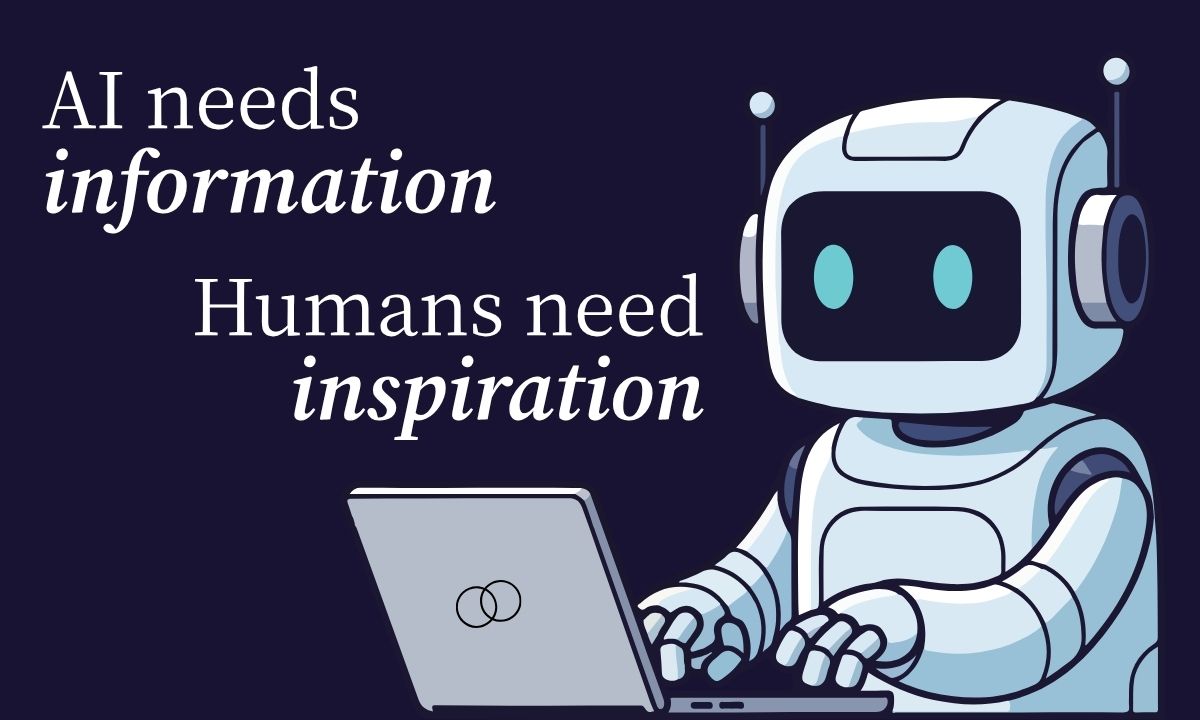
One side is for humans. It does what luxury hospitality marketing has always done: creates desire through imagery, editorial voice, pacing, and sensory specificity. If anything, this side becomes more important, because AI makes average content and generic layouts effectively free. When everyone can generate a competent website, distinctive brand storytelling is what commands rate premiums and emotional loyalty.
The other side is for machines. It's a structured, factual, current, machine-readable knowledge system: your room types, resort fees, pet policies, parking costs, accessibility details, spa hours, cancellation rules, airport distance, seasonal packages, and local expertise — organized so that AI search engines, answer systems, and emerging AI agents can find it, trust it, cite it, and act on it.
Both sides need to draw from the same governed source of truth. When they don't, AI systems fill the gap with whatever they can find — often an OTA listing, a review site, or a three-year-old travel article with your old resort fee.
Visibility is not ownership
Here's the finding that should get every revenue leader's attention: in our Momentum AiQ research on luxury hospitality brands in AI search, properties with strong traditional SEO were frequently mentioned in AI answers — but the citation often went to third-party sources. Travel publications, review platforms, OTAs, aggregators.
Being mentioned is not the same as being credited. When an AI recommends your property but cites an OTA, you lose control of the narrative, the facts, and — most importantly — the conversion path. The guest's next click may carry a commission you didn't need to pay.
This reframes the strategic question. It's no longer "How do we get users to visit the site?" It's: "How do we make our brand the trusted source that humans, answer engines, and agents rely on when they recommend and book?"
Operational accuracy is now marketing
One of the least glamorous implications is also one of the most commercially important: your operational details are now answer-engine inputs.
Pet policies. Resort fees. Parking. EV charging. Shuttle schedules. Pool hours. Dietary accommodations. Group capacities. These used to be back-office details buried in PDFs and reservation-desk scripts. Today, they are exactly the details travelers ask AI systems about — and if the information is stale, missing, or hidden inside JavaScript that AI crawlers can't read, the AI either omits your property or answers incorrectly. Wrong answers create bad expectations, negative reviews, and lost trust.
Every operationally important fact on your website should have an owner, a source, and a review cycle. That sounds like governance overhead. It's actually direct-booking defense.
What "AI-ready" actually means
You don't need to rebuild your website around speculative AI features. You need to make your current digital presence trustworthy, crawlable, structured, and measurable. In practice, an AI-ready hotel website meets a standard like this:
- Critical content lives in plain HTML. If room details, policies, and local guides only render through client-side JavaScript, AI crawlers may miss or misinterpret them.
- Structured data is implemented truthfully. Schema markup for lodging, FAQs, offers, events, and reviews is a translation layer between your brand knowledge and machine interpretation — not an SEO checkbox.
- Content is built around traveler questions, not just menu categories. AI discovery runs on intent: trip missions, constraints, comparisons. Structured FAQs win the direct policy questions; editorial and local guides win the conversational, inspirational ones.
- Crawler policy is deliberate. Blocking AI crawlers too aggressively makes the brand invisible in answers. Leaving everything open risks accuracy, load, and control. The right posture is selective, reviewed quarterly.
- You can measure AI visibility. Traffic reports won't tell you whether ChatGPT, Gemini, or AI Mode recommends you, how prominently, or who gets the citation. That requires tracking visibility, share of voice, and citation ownership across a defined universe of traveler prompts.
- The human experience is emotionally differentiated. Because in a world of AI-generated sameness, distinctiveness is the moat.
The digital concierge is the pattern to watch
Beyond discovery, AI changes the website experience itself. The most valuable emerging pattern for hospitality is not a generic support chatbot — it's a digital concierge: an interface that understands the property, the destination, and the guest's trip mission, and that can answer, inspire, qualify, and route.
Imagine a guest arriving on your site and saying: "Plan a three-night anniversary trip in October with a mountain-view suite, a couples spa treatment, and one special dinner." Instead of forcing that intent through Rooms → Dining → Spa → Offers navigation, the site assembles the relevant rooms, packages, policies, and itinerary ideas — and hands off cleanly to booking or a human when it should.
Done well, this feels like your best concierge scaled across every digital touchpoint. Done poorly, it feels like a chatbot. The difference is the underlying knowledge architecture and honest guardrails, not the chat widget.
A realistic 18-month roadmap
For an ownership group or management company weighing where to invest, the sequencing matters more than the ambition. A sensible path:
First 30 days — establish the baseline. Run AI visibility scans for your properties. What do ChatGPT, Gemini, Perplexity, and AI Mode say about you? Who gets cited? Where are you absent? Inventory your critical facts and identify what's stale, missing, or unreadable by machines.
Days 31–90 — fix the foundation. Publish or upgrade FAQ systems, correct operational content, implement schema, resolve crawl issues, and stand up a first dashboard for visibility and citation ownership.
Months 3–6 — build authority and pilot the concierge. Launch prompt-led editorial and local-guide content, pursue credible third-party placements, and prototype a concierge flow for one high-value use case — weddings, group RFPs, or trip planning — with clear escalation to humans.
Months 6–12 — operationalize. Move recurring facts into structured fields with named owners and review cycles. Monitor AI crawler behavior and content freshness as routine operations, not one-off projects.
Months 12–18 — differentiate. Deploy personalized trip-planning modules, comparison tools, and controlled interfaces that let AI agents safely retrieve information and initiate actions like availability checks and inquiry handoffs.
The questions to ask your team this quarter
If you take one thing from this article, make it these five questions for your marketing, digital, and revenue leaders:
- What do the major AI platforms currently say about our property — and who do they cite?
- Which operationally important facts on our website are outdated, buried, or invisible to machines?
- How much of our critical content depends on JavaScript that AI crawlers can't reliably read?
- What share of our AI-driven mentions convert through our own site versus an OTA?
- Who owns AI visibility as a metric — and how would we know if it improved?
If those questions produce uncomfortable silence, you're not behind everyone — most of the industry can't answer them yet. But the window in which "nobody can answer them" counts as an excuse is closing quickly.
The bottom line
AI is not replacing the hotel website. It's raising the stakes for it. The properties that win the next chapter of digital distribution will be the ones whose websites work as intelligent brand systems: a structured source of truth machines can trust, a designed experience humans can feel, and a connected action layer that turns answers into bookings.
That's the standard we're building toward with our hospitality clients — pairing brand craft with AI visibility intelligence through Momentum AiQ. If you'd like to see how AI platforms currently describe, recommend, and cite your property, that baseline is the right place to start.
Hooray is a hospitality-focused agency working at the intersection of brand strategy, content, performance, and AI visibility. To request an AI visibility baseline for your property or portfolio, get in touch at hooray.agency.